2015. szeptember 23., szerda

Mindtrek- Day 2

How Digital Experiences Can Heal People. Using virtual Reality in Health Care

After breakfast and the opening lecture, I went to Harri Lammi's presentation.
 At  the beginning, he showed us a couple of fascinating pictures Pictures, images that an trick our minds, we think that they are real but they just give the impression of reality. It is the virtual reality, that also can be used in Health Care.
He talked about soldiers that have PTSD after wars. They can be treated by the virtual reality-based therapies. They already use it in some ountries, and soldiers become much better after the 10th session of treatment, which is much faster than the traditional therapies.


It is also can be used in case of amputation. In the virtual reality the patiant can have both their limbs, and by that they can get rid of the phantom pain. Traditionally they use(d) mirrors for this. Also, when someone has a stroke and they become paralyzed, this treatment can be used, too. He showed a picture about a virtual reality treatment, where a guy who couldn't move his arm had to make tea for the tea party in Alice In Wonderland. It was not only useful but entertaining.
It's also really useful for medical students, They can get used to the surgery situations before trying it, and by that making it much more safer for the actual patiants.


Gamifying Smart City & Healthy Cities


After lunchbreak I went to another lecture. It started with a picture of the lecturer, Arto Holopainen, having fun. We are all Homo Ludens- playing men, who like games, that's why we need gamification. Then, we got some definitions:

Healthy city: A healthy city is concious of health and striving to improve it
Smart city: A city where services are made more efficient with the use of digital technologies, for the benefit of the inhabitants and business. Smart cities are self-aware, able to reconfigure themselves based on what's happening.

He talked about why gamification of technologies are imortant. It has a goal- sense of purpose, it's challange-simulate creativity, it has interaction-feedbac system, and there is the gameplay-the rules.
Gamification can improve behavioral health change procedures.
Usability->User-Centered Design-> User Experience Design ---These are the methods of the procedure

We can never be dure that our game will be good. That's why uncertainty is a big part of the design. It is just like ice fishing.....->
He is from Kuopio, Finland, where once they had the idea of summertime ice fishing. They wanted to build an ice fishing place on the market place, replace the parking lot with a huge fish tank, from which fish can be cought.

The slogan of the presentation is "Make health fun", I think it's a really good sentence.
We use technology all through our lives: Womb to Tomb, well-being is part of us everywhere.

Robotics will Transform Healthcare


When I arrived at this presentation, the lecturer Cristina Andersson was making the audience stand up. We have to dance -I still don't really know why, but it was very funny. After that she showed us Zora, an intelligent robot (picture on the left). After that she presented a lot of kind of robots, all different shapes (kangaroo, dragonfly, cat) that helps people get better- are used in healthcare.


I learnt I new expression: cobot- which is a robot that can collaborate with people.
Robots can: teach, help the old the weak, the sick, do the work of the highly educated, clean seas, save lives and the environment, they can be used in surgery, medical operations.
Roborts can feel, make decisions, develop, make more robots, sense, recognize, and they are tireless.
They can shorten hospital stays, can decrease postsurgery pain.
There are also threats: they can be hacked by cyber hackers and they can get dangerous, there is a chance they lose the connection with the cloud, that's why it needs to have a an offline mode.

City Hall conference

At the evening we went to the city hall. It is a beautiful building and I'm so glad I got the chance to go there. The mayor of Tampere had a speech and then we got some food and drink. Here are some photos I took:


Mindtrek - Day 1

Thanks to the Media Channels and Platforms course, we had the great opportunity to attend the 2015- Mindtrek Openmind event. To be absolutely honest,  I wasn't too excited when I was told I had to go to this event, I didn't really have a lot of expectations. But now that it's over, I can tell, it was really really good, I'm really happy that I got the chance to attend such an interesting, academic event.

I feel like I was been invited to the 22nd century. I mean ROBOTS!! They are not in the sci-fi films anymore, they are real, they are the present.

<-- Isn't it cool? 


Iron Sky

The first presentation I attended after the opening, was about the Finnish- German-Australian sci-fi movie, Iron Sky (you can watch the trailer above) Sadly, I haven't seen the movie yet, I have only heard about it a few times, but now I would like to watch it. The presenter was Jarmo Puskala, one of the makers  social strategist of the movie.
The title of this panel was- How to work with Internet Audience-Herding cats, so the presentation was about the social media side of the filmmaking process, which, in the
21st century is a very big part of the process.


At first we saw a video about herding cats:


It's a very funny video, and it symbolises the procedure of herding the audience.
He was talking about crowdsourcing, ( the process of obtaining needed services, ideas, or content by soliciting contributions from a large group of people, and especially from an online community, rather than from traditional employees or suppliers) and how it worked for them. He compared the online crowd to snowflakes, all very different, but if the amount is hude, then they can't be distinguished from one another.


He also talked about the noise on the internet. After sharing the trailers and broadcasting the movie, there are going to be a lot of noise (comments, judgements, theroies, etc.) around the movie, about the whole topic. For example the video in which Putin danced. It got a lot of judgement but also a lot of positive comments. It depends on the colture and on each person as well.
I think it was a really good presentation, it was interesting and he used a lot of visual media (videos, pictures) so it made the whole thing even more enjoyable. Plus, he used Prezi which was invented by a Hungarian guy (or a group of guys).


Code Fellows as Change agents


I went to another panel. To be honest I'm not really interested in this topic, nor I know anything about it, I wanted to go to the another presentation about music streaming, but it was cancelled, and I stayed in the room. But it was still interesting. Something very new for me. Many people had a few minutes lecture. They are all code fellows from different countris: Finland, Netherlands. They talked about how code fellows can improve our lives. They talked about different applications that can be very helpful in our everyday life: parking-information apps, biking-routes-apps, and the one I really liked was the Tampere Public Transport website, that I use often. And it has a real-time map, that shows ehere the different buses are. Code for America was the first organization then Code for Europe made it international.
All in all, I'm glad I went to this panel because even though I din't understand everything I got to something very new


Open Badges


Eric Rouselle was the performer of the next lecture I went to. It was about the website openbadgefactory.com. 

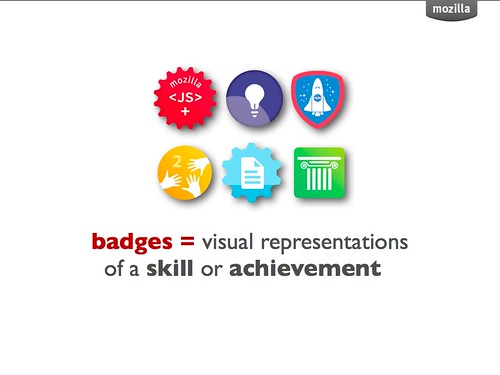
It is part of eLearning, which is very important in this century. The user can learn many thing on this website, and then get badges for it, collect them and share them on their personal profiles. For more information about it, watch the Video above or the webpage I linked. He talked about the value of badges: "It is more than a digital badge, it is a verified proof of learning."
I think it is a very good thing, and I would like to try it. Actually, I signed up while making this blog post.


2015. szeptember 18., péntek

Just some random stuff

I'm pretty sure I should read the news more often. Sometimes when I skype with my family, they talk about the shitty stuff going on in my home-coutry, And I'm like oh really, I haven't read the news for a while, sorry.
I kinda miss watching the TV-news on our bigscreen TV at home. Yes, I could watch it online as well, but I rather watch my series instead of it.
I have a flu so I'm staying in my room and I have a lot of time. I'm on facebook way too often. I'm addicted like most people. And also on twitter. I used to be on tumblr a lot but not anymore. And I read a lot, too. I just love reading.

2015. szeptember 8., kedd

Introduction video


Sorry for  the poor quility and  my accent :D

My media habbits

It is a bit different here, living in a dormitory without TV. At home I usually watch the news in the TV, here I only read the online newspapers. To be honest most of the time I just go to Facebook and there I can read some of the shared articles.
I don't read printed newspapers, because I don't like spending money on that.
I like reading about many topics, celebrities, political issues, global problems, fun-interesting articles and especially news about my favourite series, etc.

Current media issues- Refugee crisis

Hello Everyone!

I would like to talk about the refugee-issue in my country, as it is  the biggest media topic locally and globally as well.

As I mentioned in my video, I'm from Budapest,Hungary. I'm sure you have heard of my country in the last few weeks when you were reading/listening to the news. In my home country all media channels have been filled with the refugee/migrant issue. All the online newspapers that I read daily are about this terrible problem. I won't go into details, because I don't want to write about political issues, I just have to write about this, because that's the main thing I've been reading about lately. There are many contradictory articles, reports about this whole subject, one can never know what or in which article to believe.


And if only it was only in our national newspapers/Tv-news/etc! But no, you can read and hear about the way our government and people in general handle the issue in almost every big international and very famous media channels such as the guardian or BBC.

Here is an article about the refugee situation in Hungary:

http://www.theguardian.com/commentisfree/2015/sep/06/the-guardian-view-on-hungaryand-the-refugee-crisis-orban-the-awful