 Thanks to the Media Channels and Platforms course, we had the great opportunity to attend the 2015- Mindtrek Openmind event. To be absolutely honest, I wasn't too excited when I was told I had to go to this event, I didn't really have a lot of expectations. But now that it's over, I can tell, it was really really good, I'm really happy that I got the chance to attend such an interesting, academic event.
I feel like I was been invited to the 22nd century. I mean ROBOTS!! They are not in the sci-fi films anymore, they are real, they are the present.
<-- Isn't it cool?
Iron Sky
The first presentation I attended after the opening, was about the Finnish- German-Australian sci-fi movie, Iron Sky (you can watch the trailer above) Sadly, I haven't seen the movie yet, I have only heard about it a few times, but now I would like to watch it. The presenter was Jarmo Puskala, one of the makers social strategist of the movie.
The title of this panel was- How to work with Internet Audience-Herding cats, so the presentation was about the social media side of the filmmaking process, which, in the
21st century is a very big part of the process.
At first we saw a video about herding cats:
It's a very funny video, and it symbolises the procedure of herding the audience.
He was talking about crowdsourcing, ( the process of obtaining needed services, ideas, or content by soliciting contributions from a large group of people, and especially from an online community, rather than from traditional employees or suppliers) and how it worked for them. He compared the online crowd to snowflakes, all very different, but if the amount is hude, then they can't be distinguished from one another.
He also talked about the noise on the internet. After sharing the trailers and broadcasting the movie, there are going to be a lot of noise (comments, judgements, theroies, etc.) around the movie, about the whole topic. For example the video in which Putin danced. It got a lot of judgement but also a lot of positive comments. It depends on the colture and on each person as well.
I think it was a really good presentation, it was interesting and he used a lot of visual media (videos, pictures) so it made the whole thing even more enjoyable. Plus, he used Prezi which was invented by a Hungarian guy (or a group of guys).
Code Fellows as Change agents
I went to another panel. To be honest I'm not really interested in this topic, nor I know anything about it, I wanted to go to the another presentation about music streaming, but it was cancelled, and I stayed in the room. But it was still interesting. Something very new for me. Many people had a few minutes lecture. They are all code fellows from different countris: Finland, Netherlands. They talked about how code fellows can improve our lives. They talked about different applications that can be very helpful in our everyday life: parking-information apps, biking-routes-apps, and the one I really liked was the Tampere Public Transport website, that I use often. And it has a real-time map, that shows ehere the different buses are. Code for America was the first organization then Code for Europe made it international.
All in all, I'm glad I went to this panel because even though I din't understand everything I got to something very new
Open Badges
Eric Rouselle was the performer of the next lecture I went to. It was about the website openbadgefactory.com.
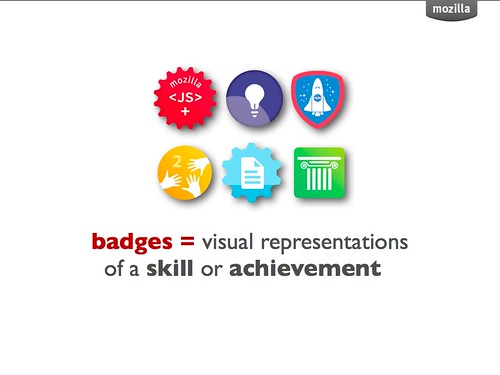
It is part of eLearning, which is very important in this century. The user can learn many thing on this website, and then get badges for it, collect them and share them on their personal profiles. For more information about it, watch the Video above or the webpage I linked. He talked about the value of badges: "It is more than a digital badge, it is a verified proof of learning."
I think it is a very good thing, and I would like to try it. Actually, I signed up while making this blog post.

Nincsenek megjegyzések:
Megjegyzés küldése